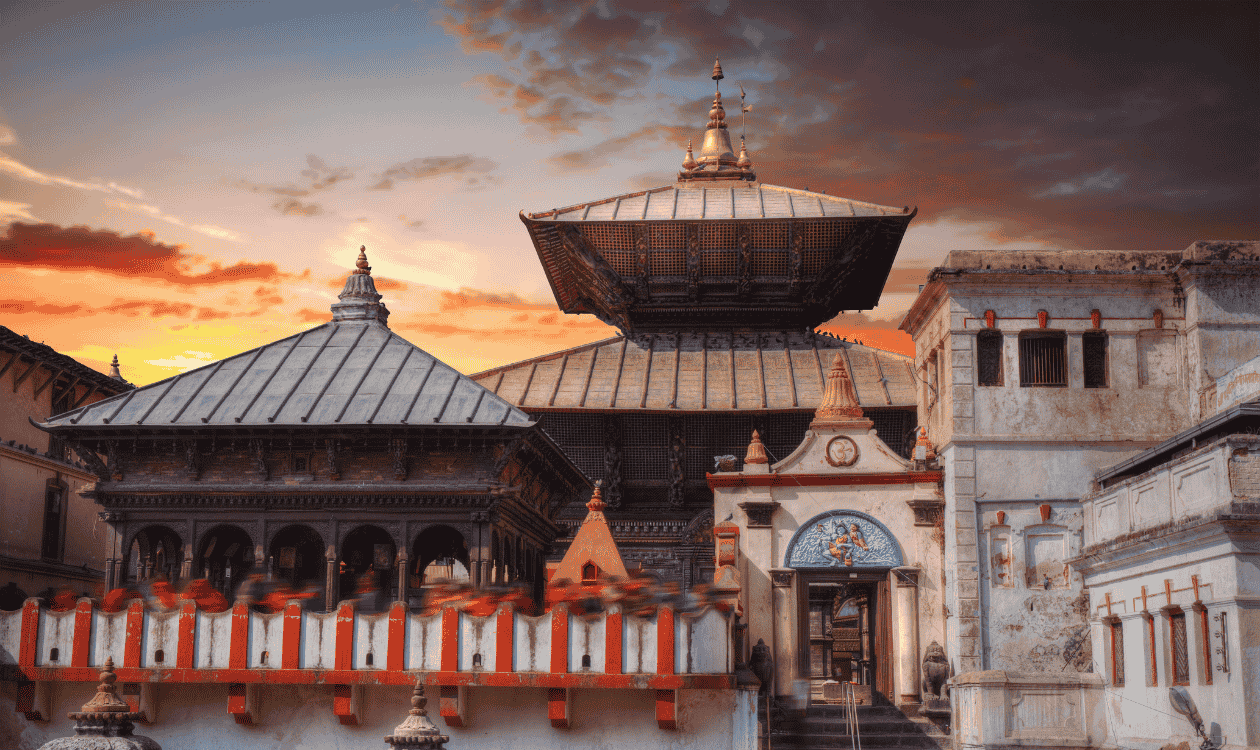
Embark on a spiritual journey to Kathmandu, home to Pashupatinath Temple - one of the most sacred Hindu temples dedicated to Lord Shiva and a UNESCO World Heritage Site. Located on the banks of the holy Bagmati River, this temple complex is not just a religious site but a living museum of Nepalese architecture, culture, and spirituality.
Our comprehensive tour offers an immersive experience into Nepalese culture and Hinduism. Witness ancient rituals, explore the intricate temple architecture, and experience the vibrant atmosphere of one of the world's most important Shiva temples. This tour combines spiritual exploration with cultural discovery in the heart of Kathmandu Valley.
Expert local guides
Multiple heritage sites
4-star hotels
4.8+ rating
Pashupatinath is one of the oldest temples in Nepal, with origins dating back to 400 AD. The current temple structure was rebuilt in the 15th century.
Holy river where cremation rituals take place. Considered sacred like the Ganges in India. Evening aarti on the riverbank is a major attraction.
Declared a UNESCO World Heritage Site in 1979. The temple complex covers 264 hectares with 518 temples and monuments.
Maha Shivaratri attracts over 1 million devotees. Other festivals include Teej, Bala Chaturdashi, and during Nepali New Year.
Arrive at Tribhuvan International Airport, Kathmandu. Meet our representative and transfer to hotel. Check-in and rest after flight.
Traditional Nepali welcome with garland and tika. Tour briefing session about Nepali culture and temple etiquette.
Traditional Nepali dinner with cultural performance. Introduction to local cuisine. Overnight stay in Kathmandu.
Early morning visit to Pashupatinath Temple for morning rituals and darshan. Explore main temple and surrounding smaller temples.
Visit Boudhanath Stupa - one of the largest spherical stupas in Nepal. Experience Tibetan Buddhist culture and prayer wheels.
Return to Pashupatinath for evening aarti ceremony on Bagmati River. Witness the beautiful rituals with hundreds of lamps.
Visit Swayambhunath Stupa - ancient religious complex atop a hill. Enjoy panoramic views of Kathmandu Valley.
Explore Kathmandu Durbar Square - historical palace complex. See ancient palaces, temples, and Kumari (Living Goddess).
Attend traditional Nepali cultural show with folk dances. Dinner at authentic Nepali restaurant. Free time for personal exploration.
Optional tour to Bhaktapur Durbar Square (extra cost). Explore ancient Newari architecture and pottery square.
Visit Thamel market for souvenir shopping. Buy handicrafts, pashmina, thangka paintings, and local spices.
Optional final visit to Pashupatinath for personal prayers. Farewell dinner with group sharing experiences.
Early morning optional visit to Pashupatinath for final darshan. Return to hotel for breakfast and check-out preparations.
Complete hotel check-out formalities. Last minute shopping or packing. Group photo session and certificate distribution.
Transfer to Tribhuvan International Airport for departure flight. Bid farewell with blessings and unforgettable memories.
September-November: 15°C - 25°C (59°F - 77°F) - Best season
March-May: 20°C - 30°C (68°F - 86°F) - Spring flowers
| Activity | Timing | Note |
|---|---|---|
| Temple Opens | 4:00 AM | For morning rituals |
| Morning Darshan | 5:00 AM - 12:00 PM | Main darshan hours |
| Temple Closed | 12:00 PM - 5:00 PM | For rituals and rest |
| Evening Darshan | 5:00 PM - 9:00 PM | Reopens for evening |
| Evening Aarti | 6:00 PM - 7:00 PM | On Bagmati Riverbank |
Indian citizens don't need visa. Others get on arrival (bring passport photos).
Modest clothing required. Leather items prohibited inside temple premises.
September-November (post-monsoon) and March-May (spring) are ideal.
No photography inside main temple. Respect signs at cremation areas.
Classic Nepalese pagoda style with gold-plated roof, silver doors, and wood carvings
Active religious site with daily rituals, festivals, and sadhus (holy men) residence
Part of Kathmandu Valley UNESCO World Heritage Site since 1979
Holy river where cremation rituals symbolize cycle of life and death


Indian Citizens: No visa required
Other Nationals: Visa on arrival available
Cost: $30 for 15 days, $50 for 30 days
Documents: Passport, 2 passport photos
Note: Can be obtained at Tribhuvan Airport

Acharya Tours is a US-based specialist offering authentic cultural and religious journeys across the Himalayas. Experience profound pilgrimages and heritage tours in Nepal, India, Tibet, and Bhutan.